‘Nougat’ – New version of Android crowned

Newest sweet treat: Google shared the event in a Twitter message tagged #AndroidNougat and containing a looped snippet of video of the undraping of an Android statue standing atop giant nougat and nut bars. — Google

Newest sweet treat: Google shared the event in a Twitter message tagged #AndroidNougat and containing a looped snippet of video of the undraping of an Android statue standing atop giant nougat and nut bars. — Google

SAN FRANCISCO: Google’s newest mobile operating system will be called Nougat, continuing a tradition of naming Android software after sweet treats, the tech giant said.

Google had invited people to send in suggestions at its annual developers conference in May, and revealed the winning Android name at a playful ceremony at its campus in the Silicon Valley city of Mountain View.

Nutella was thought to be a favourite, but Nougat won the day.

Google shared the event in a Twitter message tagged #AndroidNougat and containing a looped snippet of video of the undraping of an Android statue standing atop giant nougat and nut bars.

The technology giant has been letting developers work with the new mobile operating system, which is expected to be released later this year.

Alphabet-owned Google’s Android operating software is a computing phenomenon that powers the vast majority of smartphones sold across the world.

There were 1.16 billion smartphones shipped in 2015 that are powered by Android, according to research group Gartner. That accounted for 82% of the market, dwarfing the 225.85 million for Apple’s iOS.

Cupcake, the first version of the operating software to carry the name of an enticing desert, was released in 2009.

It was followed by Donut, Eclair, Froyo, Gingerbread, Honeycomb, Ice Cream Sandwich, Jelly Bean, KitKat, Lollipop and current-generation Marshmallow. — AFP

Source: The Star Online

Apple invests $1B in China’s largest taxi app

apply_shutterstock_315011135

Apple made the bombshell announcement today that it has invested $1 billion in China’s top ride hailing app. Didi Chuxing (formerly called Didi Kuaidi) is often described in U.S. media as Uber’s Chinese rival, but it already dominates the market by far. The company claims it fulfilled one billion rides last year and holds 87 percent of the country’s private ride-hailing market.

In an interview with Reuters, Apple CEO Tim Cook said, “We are making the investment for a number of strategic reasons, including a chance to learn more about certain segments of the China market. Of course, we believe it will deliver a strong return for our invested capital as well.”

Didi Chuxing told Reuters that this is its single largest round of funding so far. It claims to currently complete more than 11 million rides a day and have over 14 million drivers on its platform. The company’s other major investors include Tencent and Alibaba, two of China’s largest Internet companies, and SoftBank.

According to a WSJ report from February, the company was then in the process of finalizing a round for $1 billion at a valuation of $20 billion. A Didi Chuxing representative said Apple’s investment is part of the same round, but declined to confirm the valuation. TechCrunch has also emailed Apple for more information.

In a press release, Didi Chuxing founder and CEO Cheng Wei said, “The endorsement from Apple is an enormous encouragement and inspiration for our four-year-old company. DiDi will work hard with our drivers, riders and global partners, to make available to every citizen flexible and reliable mobility choices, and help cities solve transportation, environmental and employment challenges.”

China is on its way to becoming Apple’s biggest iPhone market, but the company has faced a few recent setbacks there. After years of giving it a relatively free rein for a U.S. tech company, the Chinese government ordered the closure of iBooks Store and iTunes and Movies just six months after the services launched in China.

Furthermore, while Apple’s sales in China are still growing, it’s at a much slower rate than before as the Chinese economy becomes sluggish and the smartphone market in general faces less demand. Concerns about Apple’s reliance on China prompted activist shareholder Carl Icahn to sell his entire stake in the company earlier this year.

Investing in Didi Chuxing allows Apple to grab a foothold in the Chinese tech market that reaches beyond iPhones—and also gives it a new platform for its other technology. For example, if Didi Chuxing uses CarPlay, that gives Apple another outlet to sell software services in China beside the iPhone, as well as valuable data to tailor apps and maps for Chinese users. Didi Chuxing is also a major potential customer once Apple’s self-driving car comes to fruition.

Source: TechCrunch

$500 million startup fund from Lenovo

lenovo

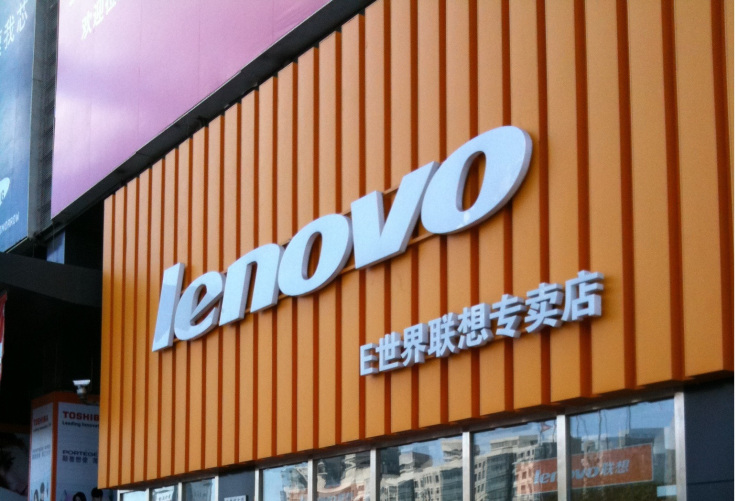
Chinese tech giant Lenovo is investing $500 million in startups after it announced a new fund.

Unlike other corporates, Lenovo has a history of making deft investments. Its first fund, created in 2010 and $100 million in size, includes Israeli facial recognition startup Face++, publicly listed Chinese firm iDreamsky and biometrics specialist Nok Nok Labs from the U.S. among its 40-plus company portfolio.

With its second fund, Lenovo said it is looking to back companies with synergies to its businesses and, in particular, those in the cloud computing, big data, artificial intelligence, robots and other Internet services spaces.

Beyond backing upcoming companies, Lenovo has also launched an incubator program for its own businesses. In the same spirit as Baidu, which recently spun out its video and student learning services, so Lenovo is pushing a “subsidiary incubation” program which allows some of its units to go independent, raise funding from third-party investors and tap into the new Lenovo Capital and Incubator Group (LCIG).

Lenovo said that SHAREit, its file-sharing application, Lenovo Cloud, and Lenovo Connect as some of the first to benefit from going independent as a subsidiary, and it has others planned in the near future.

“Technology breakthroughs are changing the way all of us live today. With our long-industry history and experience of driving and developing core innovations, we’re well-prepared to shape the future of game-changing technologies through funding and nurturing start-ups and bringing incubator projects to market,” Lenovo CTO He Zhiqiang said in a statement.

Lenovo’s new fund and startup push come at a time when the company is restructuring after posting its first loss last year amid a challenging business environment.

While it remains the top PC seller worldwide, the market is shrinking which has impacted Lenovo’s sales. Analyst firm IDC reported that Lenovo grew its marketshare from 19.4 percent in Q1 2015 to 20.1 percent in Q1 2016, but its actual shipment numbers fell by 8.5 percent over that same one year period.

Lenovo is also struggling in the smartphone space. Last month, IDC found that the company had fallen from the world’s top five phone makers as its core Chinese market continues to contract.

Source: TechCrunch

Zalora is selling off business units

zalora

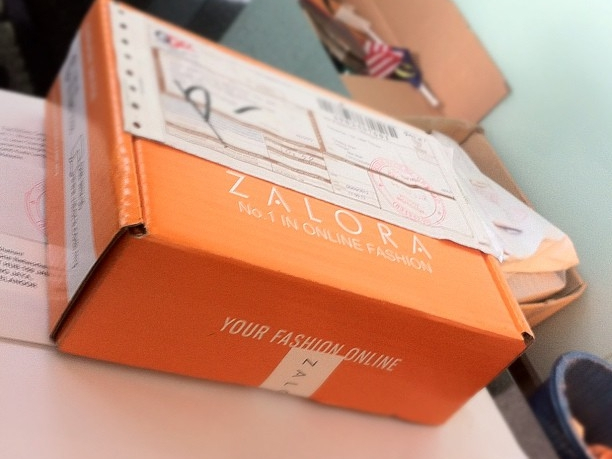
The ink is barely dry on Alibaba’s billion dollar investment in Southeast Asia’s Lazada, but already we have news of another Rocket Internet divestment. Zalora, Rocket Internet’s fashion-focused site that raised over $250 million and was once on an equal footing with $1.5 billion-valued Lazada, is shedding two of its lackluster country businesses to cut down on costs, TechCrunch has learned.

Rocket Internet made big moves to fill the e-commerce void in Southeast Asia, a region with over 550 million people but no service from Amazon or eBay, when it started Lazada and Zalora in 2012. Both eyed profitability by 2015, but the two companies continue to pull in heavy losses thanks a combination of factors, including aggressive early targets and slow market growth.

Zalora, Rocket Internet’s take on Zappos, has deemed its businesses in Thailand and Vietnam surplus to requirements and it is in the process of selling both, a source close to Rocket Internet told TechCrunch.

A Zalora spokesperson declined to comment.

Alongside The Iconic, Zalora covers 11 countries across Asia Pacific, including Indonesia, Taiwan and Australia. Our source said the company is now focused on countries where it is “on the verge of profitability” and Thailand and Vietnam don’t figure in that equation. Zalora may opt to sell other business further down the line to further streamline its spending.

According to Rocket Internet’s latest financial results, Zalora’s revenue rose 78 percent to €208 million ($234 million) in 2015, but its net loss increased 36 percent to €93.5 million ($105 million.) Its finances may not be as dire as Lazada’s but, as some have noted, Zalora’s cash reserves can’t be far from depletion so cost-cutting is on the agenda.

Like Lazada, Zalora has been shopped to investors and potential acquirers for some time, our source told us. However, while Rocket Internet was seeking to exit Lazada in its entirety, it is breaking Zalora out into chunks that are for sale in specific markets. That may be because the company is part of Global Fashion Group (GFG), its group of fashion-focused e-commerce players worldwide, while there’s no obvious buyer — unlike Lazada which had Alibaba. (Zalora’s valuation is unclear because it is part of GFG, which was valued at $3 billion when it raised funding last summer.)

TechCrunch understands that a local conglomerate has agreed to purchase Zalora Thailand for just $10 million, although the deal is not closed yet. The acquirer of the Vietnam business is not known right now. (Incidentally, Rocket Internet sold Foodpanda Vietnam last year.)

The timing of these exits is particularly interesting. Japan’s Rakuten recently quit Southeast Asia — selling its Thailand-based business in the process — while Alibaba bought that majority stake in Lazada just before the company ran out of cash. Rocket Internet bagged a respectable 15X return on its investment, but other investors were left disappointed with modest exits after being sold on the ambitious vision of building Lazada into the Amazon of Southeast Asia.

Southeast Asia has long sat in the shadow of larger markets like China and India, but, with over 500 million consumers and a raising middle class, it has potential to be very significant. However, with just three percent of commerce happening online, inconsistent logistics and differing cultures across the region, building a successful e-commerce business is hugely challenging and capital intensive.

These sales appear to mark a new focus for Rocket Internet in Asia. The company has spent the past few years developing companies with serious scale — like Lazada, Zalora and Foodpanda — but it recently announced a new strategy that takes it back to launching early-stage startups in the region — such as budget hotel network Zen Rooms. It isn’t just Southeast Asia where it is getting out of its more capital-intensive businesses. Beyond Lazada and Zalora, Rocket Internet sold India-based Fab Furnish this month, and it is reportedly looking for buyers to take Foodpanda India and e-commerce player Jabong off its hands.

Source: TechCrunch

New Windows 10 build released

Fine-tuned: Among the updates are improvements to the Start menu and Start screen, as well as several shortcuts to improve efficiency and ease-of-use. — Microsoft

Fine-tuned: Among the updates are improvements to the Start menu and Start screen, as well as several shortcuts to improve efficiency and ease-of-use. — Microsoft

Microsoft has announced the release of the new PC and mobile OS build, allowing users – among other updates – to try out Windows Ink, a hub for writing and sketching apps.

As part of the new Windows 10 Build 14328, users will be able to test the system’s new features, most notably Windows Ink, whose workspace includes sticky notes, a sketchpad, whiteboard and a screen sketch option.

The updates include improvements to the Start menu and Start screen, as well as several shortcuts, to improve efficiency and ease-of-use. A number of improvements to Cortana are intended to make the Windows personal assistant more accessible and useful.

Users signed up to the Windows Insiders program can test the new features and updates by visiting Windows Update and upgrading to the new build. — AFP Relaxnews

China ban on Apple services is a challenge for key growth area

People line up outside an Apple store as iPhone SE goes on sale in China, in Hangzhou

The blocking of Apple mobile entertainment services in China poses fresh challenges for the tech company as it prepares to report its first-ever drop in iPhone sales.

The news on Thursday that Apple Inc’s online book and film services had gone dark in China came at a vulnerable moment for the company. Apple executives have said that iPhone sales will fall for the first time in the company’s second quarter, and the results for that quarter will be released on Tuesday. Investors are sensitive to any signs of trouble in Greater China, the company’s second-largest market by revenue.

Apple executives have flagged the growing services business as a potential source of revenue as sales of the company’s flagship devices level off, upping the stakes for success in China, said analyst Bob O’Donnell of TECHnalysis Research.

“It raises questions in an area that we know long-term is going to be very strategically important to Apple,” he said.

The New York Times reported on Thursday that a state regulator demanded Apple halt the service. The move came after Beijing introduced regulations in March imposing strict curbs on online publishing, particularly for foreign firms.

Still, the outage is only troubling if it persists, O’Donnell said. Apple said in a statement on Thursday that it hopes to make the services available to customers in China as soon as possible.

Apple has a strong track record of working with officials in China, where it has launched a series of services including mobile payment Apple Pay, but some analysts questioned whether the company may receive a chillier reception in the future.

“Is this the beginning of more pressure on Apple by the Chinese government?” asked analyst of Frank Gillett of research firm Forrester. “It’s a symbolic turn, and the question is to what extent is it a harbinger.”

The company released its book and movie services in China only late last year, leaving Chinese consumers little time to form a habit.

“People who are buying iPhones in China aren’t buying them for iTunes,” said O’Donnell. “They are buying it for the status and the cachet of owning an Apple product, and that is really more about the hardware.”

Chinese consumers’ appetite for the phones themselves will be critical to quarterly earnings. Apple is expected to post its first-ever quarterly drop in iPhone sales, to about 50 million units, reflecting a saturated global market.

Wall Street expects adjusted earnings per share to drop 14 percent to $2.00 and revenue to drop 10 percent to $52.0 billion, according to Thomson Reuters I/B/E/S.

Source: Reuters